



There are countries you visit with your eyes.
And there are those you taste.
Tunisia belongs to the second kind. Here, cooking is not just a daily act — it’s a ritual, a poetry written in colors, scents, and flavors. It’s the warmth of a kitchen where olive oil glimmers like sunlight, where harissa simmers like a quiet flame, and where every plate tells a story older than memory.
The air itself carries the smell of cumin, coriander, and grilled fish — the smell of the Mediterranean meeting the desert.
1. A Symphony of Flavors
Tunisian cuisine is a mosaic of tastes: fiery, sunny, and soft at once.
A spoonful of harissa sets the rhythm — not harsh, but warm and alive, like a heartbeat. Then come the layers: the sweetness of ripe tomatoes, the earthiness of chickpeas, the sea’s delicate salt, the sharp kiss of preserved lemon.
Every ingredient has its place. Every flavor has a voice. Together, they sing of history and hospitality.
2. The Colors of the Table
Tunisian food is as beautiful as it is delicious.
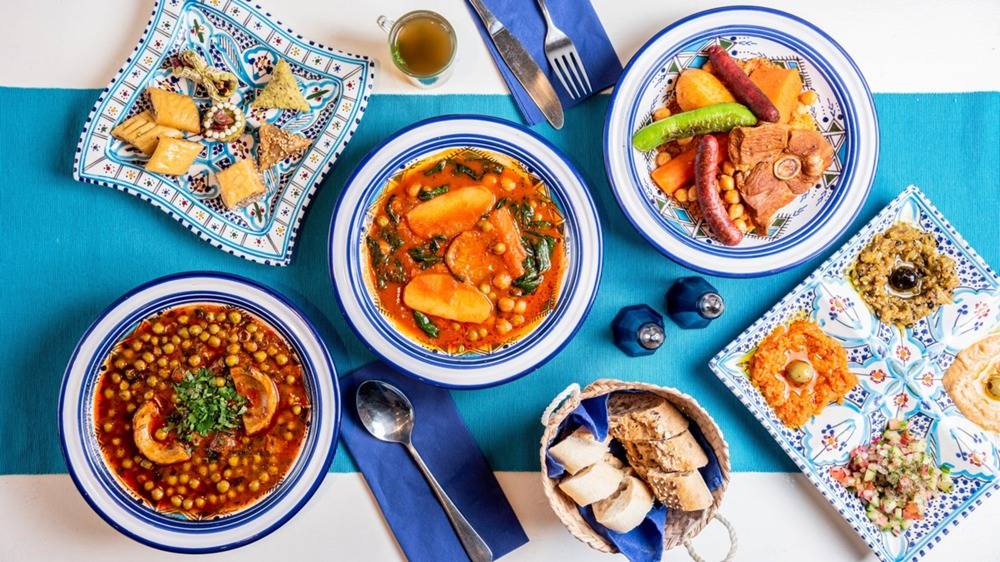
Plates are painted like living canvases: vibrant reds of harissa and peppers, golden couscous glowing like desert sand, greens of fresh herbs, whites of yogurt sauces, the blue of handmade ceramics framing it all.
The table setting itself is part of the experience — a feast not only for the mouth, but for the eyes. A Tunisian meal begins long before the first bite; it begins with the colors that awaken the senses.
3. Ancestral Dishes that Breathe History
The same couscous that nourished ancient Berber tribes still steams in family kitchens every Friday. The golden crust of brik breaks with the same satisfying crack as it did a century ago. A bowl of lablabi — humble, fragrant chickpeas swimming in cumin — warms hands in winter just as it did in the old souks.
Recipes are passed down not in books, but in gestures, in stories whispered while chopping herbs. Every dish is a bridge between centuries.
4. The Fantasm of Spice — Harissa, the Red Soul
It’s more than a condiment — it’s a state of mind.
Spicy, smoky, and sun-born, it carries the soul of the land: the heat of summer, the patience of drying chilies, the intimacy of mortar and pestle. Harissa is the flame at the center of the Tunisian table — where bread dips, where conversations linger, where even the shyest dishes find their fire.
Tunisians don’t just eat spice. They live it. They offer it like a handshake, like a welcome.
5. The Smell of the Mediterranean
Tunisia breathes with the sea.
Early in the morning, fishermen return with their boats, and soon the air is full of the scent of grilled fish, octopus, and olive oil warming on open flames.
Lunch is slow, sunlit, shared with hands, with bread still warm from the oven. The sea is not just an ingredient here — it’s a presence. It perfumes every street, every market, every table.
6. Sweetness in Slow Afternoons
When the day softens, sweetness arrives.
Honey glistens over makroud, the air smells of orange blossom, and mint tea pours in long golden threads into small glasses. Almonds crack softly between teeth, sesame sings on the tongue.
Tunisian sweets are not rushed. They linger like sunset light — warm, golden, generous.
The Tunisian Taste
Tunisian cuisine is not just about what you eat.
It’s about how it feels — the heat of the harissa on your lips, the scent of cumin in the air, the softness of bread between fingers, the riot of colors on the table, the joy of sharing without hurry.
It’s a cuisine born between sea and desert, written in fire and sunlight, perfected with love.
It’s a living heritage — and a daily feast.




admin
October 28, 2024Our adventure begins amidst the rugged beauty of the Scottish Highlands, where mist-covered mountains and shimmering lochs create a landscape straight out of a fairytales.